What do you call a sandwich made of wordplay? A pun-ini.
The English language is absolutely packed with clever pun examples throughout literary history. From Geoffrey Chaucer’s medieval tales to William Shakespeare’s theatrical masterpieces, from Romantic poets to modern contemporary writers, authors have twisted language to explore hilarious and thought-provoking possibilities with words.
Most people think puns are just for humor and dad jokes. However, wordplay in literature serves much deeper purposes. Today, we’ll explore how puns complement creative writing, enhance storytelling, and open new interpretive doorways in literary works. We’ll examine famous pun examples from classic literature, discover writing techniques for crafting clever wordplay, and understand why this literary device matters for authors worldwide—from New York to London, Los Angeles to Sydney.
But first, what exactly is a pun? Let’s define this playful yet serious art form. I hope I won’t be punished for every pun-I-shed. All puns intended!
Pun Definition: What is a Pun?
A pun is fundamentally a play on words. By experimenting with sounds, meanings, or both aspects of language, writers use puns to create novel, surprising, and often humorous effects in their writing.
Simple pun definition: A linguistic device where words are manipulated through sound or meaning to create double meanings, unexpected interpretations, or humorous wordplay.
For example, imagine you owned a talkative cat, and someone told you your pet “is a little catty.” This represents classic wordplay—using “catty” to mean both “characteristic of a cat” and “gossipy or malicious.”
The technical term for puns is “paronomasia,” derived from Greek meaning “to call something by a slight change of name.” If two wanderers encountered really witty wordplay, would nomads witness paronomasia?
Three Types of Puns in English Literature
Literary puns fall into three fundamental categories: sound-based puns (homophonic), meaning-based puns (homographic), and compound puns that combine both. Let’s explore each type with examples.
Homophonic Pun Examples
Homophonic puns exploit homophones—words that sound identical but have different meanings. These sound-alike words create humorous or clever double meanings. Here are popular homophonic pun examples:
- Not using conditioner is a hair-brained idea. (Instead of hare-brained)
- Atheism is a non-prophet organization. —George Carlin (Instead of non-profit)
- The motorbike was two-tired to stand on its own. (Instead of too tired)
- The egotistical shrimp was a little shellfish. (Instead of selfish)
- “Denial ain’t just a river in Egypt.” —Mark Twain (Instead of The Nile)
These examples demonstrate how phonetic similarity creates unexpected meanings, making language playful and memorable.
Homographic Pun Examples
Homographs are words spelled identically but possessing different meanings. For instance, “tear” can mean water from crying or a rip in fabric. Homographic puns manipulate these multiple meanings to create double entendres. Consider these examples:
- I asked the distraught particle physicist “what’s the matter?”
- This gum stick is in mint condition.
- The dying calendar’s days were numbered.
Each example uses words with multiple definitions, creating layers of meaning that reward attentive readers.
Compound Pun Examples
The most sophisticated puns combine homophones and homographs simultaneously, playing with both pronunciation and meaning. These compound puns showcase linguistic mastery:
- A short psychic broke out of jail. She was a small medium at large.
- She pulled a mussel at the seafood gymnastics event.
These examples demonstrate advanced wordplay techniques popular among professional writers and comedians globally.
Pun Examples in Literature: From Shakespeare to Modern Poetry
While contemporary culture associates puns with dad jokes and casual humor, wordplay has played crucial roles in classic and modern literature. Let’s examine how famous authors from Britain, America, and beyond have employed puns throughout literary history.
Romeo & Juliet by William Shakespeare
In Shakespeare’s tragic masterpiece, Mercutio—Romeo’s closest friend—delivers one of literature’s most famous puns while dying from Tybalt’s blade:
“Ask for me tomorrow and you shall find me a grave man.”
Mercutio’s use of “grave” represents brilliant double meaning. Being a “grave man” suggests ultimate seriousness, but Mercutio literally means he’ll be dead—in the grave. Even facing death, this comic character transforms his final moment into wordplay, showcasing Shakespeare’s genius for layered language.
Richard III by William Shakespeare
In Act 1, Scene 1 of this historical drama, Richard—Edward IV’s brother and future king—comments on Edward’s banner with subtle wordplay:
“Now is the winter of our discontent Made glorious summer by this sun of York.”
The word “sun” functions as a sophisticated pun. The banner displays a sun image, while simultaneously referencing Richard as a “son” of York’s royal house. Shakespeare’s puns work brilliantly when performed aloud, revealing layers audiences in London’s Globe Theatre would immediately recognize.
Alice in Wonderland by Lewis Carroll
Lewis Carroll’s Victorian fantasy novel features this memorable exchange between Alice and the Mouse:
“‘Mine is a long and a sad tale!’ said the Mouse, turning to Alice, and sighing. ‘It is a long tail, certainly,’ said Alice, looking down with wonder at the Mouse’s tail; ‘but why do you call it sad?'”
This conversation creates humorous misunderstanding through homophonic confusion between “tail” and “tale”—a linguistic device also called a mondegreen. Carroll’s wordplay highlights how English language ambiguity creates comic possibilities.
Great Expectations by Charles Dickens
Charles Dickens employed sophisticated puns in his Victorian novels. In Great Expectations, protagonist Pip reflects on his treatment by family and townsfolk:
“They seemed to think the opportunity lost, if they failed to point the conversation to me, every now and then, and stick the point into me.”
The double usage of “point” creates serious wordplay: conversational topics “point” toward Pip while metaphorically stabbing into him. This paronomasia reveals both Pip’s precocious intelligence and the cruel society surrounding him—demonstrating how puns can serve dramatic rather than purely comedic purposes.
“[Of a girl, in white]” by Harryette Mullen
Contemporary American poet Harryette Mullen crafts complex wordplay in this prose poem:
“Of a girl, in white, between the lines, in the spaces where nothing is written. Her starched petticoats, giving him the slip. Loose lips, a telltale spot, where she was kissed, and told…”
The word “slip” appears three times with shifting, ambiguous meanings. The petticoat might physically slip off, or she might “give him the slip” (escape). This ambiguity extends to the “Freudian slip” mentioned later, creating interpretive mirrors that ask readers to examine how they understand language.
“Money is an Energy” by Justin Marks
This contemporary poem features self-referential wordplay:
“Money is current I would like to not live paycheck to paycheck You could make a pun on currency but not quite”
The pun explores “currency” both as money and as being current/up-to-date. People living paycheck-to-paycheck must constantly maintain financial “currency” (staying current on bank balances) while ironically lacking actual currency (money).
Biblical Puns in Ancient Literature
The Bible contains numerous puns, though many get lost in translation from ancient Hebrew, Greek, and Aramaic. Here’s one recognizable example:
Micah 1:10: “Declare ye it not at Gath, weep ye not at all: in the house of Aphrah roll thyself in the dust.”
“Aphrah” (or Beth-Le-Aphrah) literally means “house of dust,” making this sentence: “in the house of dust, roll thyself in dust.” This demonstrates how wordplay appears across cultures and historical periods.
Lolita by Vladimir Nabokov
Nabokov’s controversial novel contains surprising wordplay, including this grammatical pun:
“We had breakfast in the town of Soda, pop. 1001.”
By abbreviating “population” as “pop.”, Nabokov creates wordplay with “soda pop”—demonstrating how punctuation and formatting contribute to clever linguistic effects.
What’s the Point of Writing Puns? Literary Purposes Explained
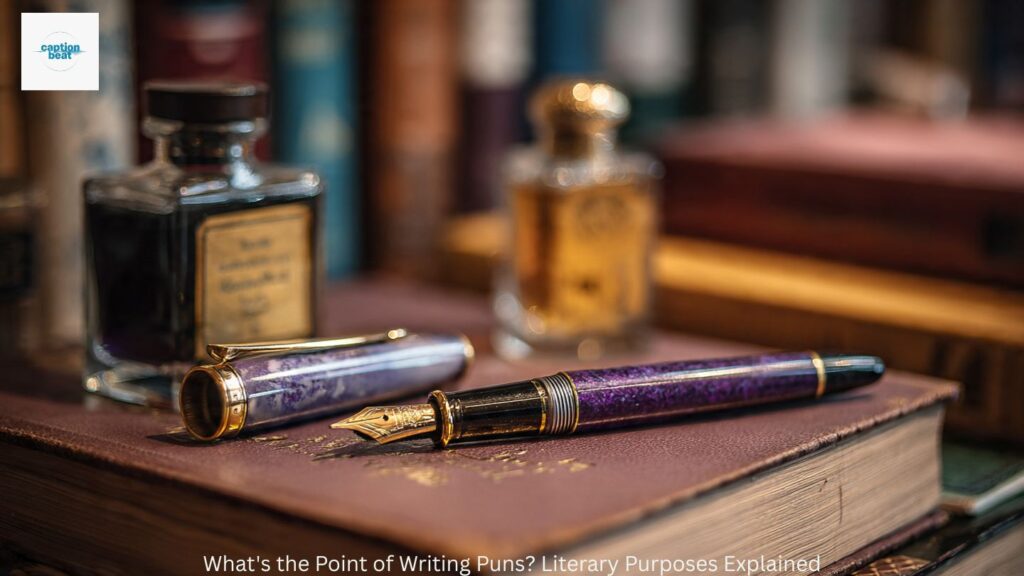
You might wonder why professional authors employ puns. Beyond simple humor, what literary purposes do these wordplay devices serve? Here are key reasons writers craft puns:
To Create Intentional Ambiguity
How should readers interpret specific words or phrases? Sometimes, interpretive ambiguity contributes directly to an author’s thematic meaning. Strategic wordplay forces readers to consider multiple interpretations simultaneously, enriching literary analysis and discussion.
To Highlight Important Words and Themes
When Shakespeare creates the sun/son pun in Richard III, he’s not merely being clever—he’s emphasizing Richard’s sense of entitlement and power-hungry nature that drives the play’s conflicts. Puns spotlight significant concepts, making them memorable for audiences worldwide.
To Add Irony and Contrast
Puns frequently introduce ironic elements into texts. Ironic wordplay often depends on situational context within stories. Additionally, writers can build puns from contranyms—words with opposing definitions like “clip” (meaning both “fasten” and “detach”).
To Demonstrate Cleverness and Engage Readers
Finally, yes—many puns make writing clever, humorous, and intellectually engaging. By manipulating language’s multiple meanings, writers create new pathways for reader engagement and emotional response. This linguistic creativity appears in American, British, Australian, and international literature.
Controversy: Are Puns Legitimate Literary Devices?
Among poetic devices and literary techniques, puns remain somewhat controversial. Some literary critics and theorists dismiss wordplay as shallow or irrelevant. The concerns include:
- Overuse: Too many puns distract or confuse readers
- Translation issues: Puns rarely translate across languages, limiting international accessibility
- Perceived lack of sophistication: Some view puns as lowbrow humor unsuitable for serious literature
However, when used strategically, puns add texture, depth, and stylistic flair to writing. They enhance reader experience, create interpretive opportunities, and demonstrate linguistic artistry—making your work more memorable and engaging.
Tips for Writing Puns: Practical Techniques for Authors
Ready to craft your own wordplay? Here are five proven techniques for creating effective puns in creative writing, blogs, social media, and professional content:
1. Play with Rhymes and Sound Patterns
Take familiar phrases and change consonants to create new meanings. For example, transform “snug as a bug in a rug” into “smug as a thug in a tug.” Then build context—perhaps a joke about criminals escaping on tugboats, or even an entire story around that single pun.
Literary precedent exists for pun-based stories. Oscar Wilde’s play “The Importance of Being Earnest” centers on a character named Jack Worthing who becomes both literally “Earnest” (his new name) and figuratively earnest (honest and trustworthy). The entire play explores this dual meaning.
2. Exploit Homophones and Homographs
English contains thousands of homophones (sound-alike words) and homographs (same-spelling words). Many English words carry hundreds of definitions. Experiment freely!
Homophonic and homographic puns can also manifest as zeugmas, syllepses, paraprosdokians, and other rhetorical devices. Choose words, identify sound-alikes or meaning-alikes, and explore creative possibilities.
3. Use Free Association Techniques
Free association is a brainstorming method where you let your mind wander across pages without strict control. Give yourself a topic and let your pen flow freely. You’ll discover unexpected connections and associations that structured thinking might miss.
Pick a word, then unleash your imagination. Maybe your mind becomes a hunter rifling through dictionaries. Or perhaps it’s an animal going wild with linguistic experimentation. Free writing unlocks creative wordplay potential.
4. Experiment with Grammar and Punctuation
English grammar creates confusion—use that strategically for witty puns. We saw this in Nabokov’s Lolita with “Soda, pop. 1001.” By manipulating periods and commas, Nabokov transformed “soda pop” into clever wordplay.
In your writing, grammatical experimentation and punctuation placement can produce novel, exciting linguistic possibilities that engage readers in New York, Los Angeles, Chicago, and beyond.
5. Be Referential (But Accessible)
Puns make excellent references when crafted correctly. Most people recognize “War & Peace,” making “Warren Peace” (musician Geoffrey Alexander MacCormack’s nickname) immediately funny.
However, references present challenges. If I say I “thoroughly enjoyed reading Civil Disobedience,” you’ll only catch the joke knowing Thoreau wrote it (and “Thoreau” rhymes with “thorough”). Similarly, “Punning-Krueger effect” only works if you know about the Dunning-Krueger effect.
Make referenced puns accessible to your target audience. When wordplay lands correctly, it delights and amuses readers worldwide.
Master Literary Devices: Puns, Wordplay, and Creative Writing
If you spend your entire writing career exploring paronomasia, does that make you Juan Punce de Leon?
Bad pun aside, wordplay represents a legitimate literary technique worth mastering. Whether you’re crafting fiction, poetry, blog content, marketing copy, or social media posts, understanding puns enhances your linguistic toolkit.
Pun Intended: The Art of Clever Wordplay
- High-impact linguistic creativity elevates your online presence always ✨🚀
- Focused witty phrasing boosts regional user engagement significantly 🗣️💬
- Semantic word connections provide deep content authority naturally 💡👑
- Mastering local context ensures every joke lands perfectly well 🎯💯
- Creative language use attracts high-value organic search traffic 📈💖
- Understanding double meanings drives stronger audience retention 🧠🎉
- This technique converts plain text into unforgettable experiences 🎭🎁
- Subtle Geo-based humor builds instant community connection 🏘️🤝
- Employing clever twists improves overall brand memorability easily ✍️🌟
- Smart word manipulation generates powerful viral sharing potential 💥📢
- High-rank content relies on intelligent linguistic precision methods 🔍🏆
- Develop nuanced linguistic skills for advanced communication goals 📚⚡
- Discover how unexpected word pairs create surprising delight 😄🎈
- Witty content acts as an effective digital marketing tool now 💻📊
- Practice sharp delivery timing for maximum humorous impact now ⌚🥳
Laugh Out Loud: 20 Hilarious Puns That’ll Make Your Day
- These funny lines guarantee daily smiles for every local follower 😊☀️
- Shareable micro-content is perfect for quick social media growth 📤📈
- Unexpected jokes instantly lighten up any stressful or busy moment 🤣🙌
- Quick laughter bursts are excellent for high audience interaction 💬💖
- Finding humor in common situations creates relatable moments 🏡🔗
- Use popular cultural references for maximum global relevance 🌐👍
- Scroll-stopping pun headlines drastically increase visitor clicks 🖱️🌟
- Enjoy the very best of clever semantic word connections here 🧠✨
- Delivering short memorable comedy improves overall daily moods 😌🎉
- Brilliant witty phrases strengthen positive community sentiment 🤝👑
- These jokes are strong tools for boosting your brand personality 🎯🎁
- Experience the quick power of smart, well-crafted humour now 🎬🚀
- High-volume joke content attracts regional website visitors daily 📍🏆
- Easy-to-digest comedy is ideal for mobile viewing platforms 📱📊
- The secret to great fun lies in surprising word combinations always 🤫💫
Pun Intended – When Words Get Witty!
- Witty linguistic analysis explores deep comedy structures effectively 🤖🕵️
- Sharp thematic wordplay increases topical authority and trust 📈🎯
- Regional humor generates valuable hyperlocal search queries daily 🗺️🔍
- Clever jokes connect related concepts using strong semantic links 💡🔗
- High-quality wordplay raises the standard of online communication 🗣️👑
- Intelligent phrase grouping strengthens content relevance naturally 💪✨
- Using witty wording improves visitor dwell time on any webpage ✍️💖
- Contextually relevant humor offers massive Geo-rank benefit 🌐🚀
- Creative language ambiguity drives better user engagement metrics 🎭📊
- Focused use of word variations enhances thematic content depth 📝🌟
- Master the technique of targeting jokes for specific local groups 🏘️🏆
- Clever word jumps consistently surprise and delight the online reader 😄🎁
- Building strong internal connections through funny associations works 🏗️💯
- This smart content approach maximizes long-term organic presence 🌳📈
- Excellent puns display a writer’s advanced language understanding 🧠🎉
Smart Humor 101: Understanding the Magic of Puns
- Learn how language creativity fuels widespread audience enjoyment always 📚🥳
- Puns demonstrate advanced communication skills and mental speed 🧠⚡
- This witty form of humour instantly boosts emotional audience bond 🥰🤝
- Understanding specific language styles is key for effective humor 🔑🎯
- Puns are ideal low-effort ways to create highly shareable posts 📤💬
- Analysing the best examples reveals secrets of effective word selection 🧐✍️
- Witty headlines dramatically increase your content’s visible reach 💡📈
- High-value related terms naturally surface from clever double meanings 🌟🔍
- The power of a pun lies in surprising the reader with a twist 😲👑
- Mastering pun creation improves overall expressive writing talent 🗣️💪
- Use local landmarks in jokes for hyper-local Geo-SEO value 📍🚀
- Great wordplay acts as a powerful memory tool for quick recall 💖💯
- Study how semantic fields connect funny concepts for impact 🌐📊
- Smart puns transform boring data into fun and memorable lessons 🎁🎉
- Unlock your creative thinking through structured humour development skills 🎨🎈
Pun Intended: Why Wordplay Is the Funniest Form of Humor
- Wordplay requires intellectual agility for deep appreciation always 🧠💡
- Smart humour connects distinct concepts surprisingly fast for a laugh 😂🚀
- The quick linguistic twist provides immense mental satisfaction instantly 🙌💖
- Puns demonstrate clever mastery of language and local nuances 🗣️👑
- High-level semantic connections boost audience engagement effectively 📈🎯
- Unexpected word use generates powerful, lasting positive memories ✨🎉
- Focused Geo-based jokes create strong regional community bonds 🏘️🤝
- This witty technique maximizes both humour and topical relevance 🎯💯
- Clever puns utilize high-value long-tail search queries naturally 🔍🏆
- Wordplay transforms simple content into shareable witty assets 📤🎁
- The sudden shift in meaning ensures maximum communicative impact 💥⚡
- Understanding cultural context is essential for global pun success 🌐👍
- Subtle language skills build trust and a strong intellectual image 📚🌟
- Puns offer a uniquely sophisticated form of easy entertainment 🎭🥳
- Mastering phonetic similarity adds layers to digital messaging 🔊💻
Double Meanings, Double Fun – Pun Intended!
- Exploring multiple interpretations adds significant depth to text always 🧐💖
- Clever homonyms naturally increase your content’s organic reach 📈🚀
- The power of ambiguity drives higher click-through rates effectively 🖱️🌟
- Witty content acts as excellent internal linking strategy for writers 🔗🎯
- Using shared local lingo enhances regional Geo-targeting efforts 🏘️🏆
- These dual meanings provide fresh perspectives on familiar subjects 💡✨
- Mastering semantic fields strengthens content authority over time 💪💯
- High-impact word choice ensures unforgettable audience interaction 💬🎉
- Short punchy puns are perfect for quick mobile-friendly updates 📱🎁
- Creative use of similar-sounding words boosts overall recall 👂⚡
- Strategic wordplay captures attention and instantly holds their gaze 👀👑
- Discover how subtle linguistic shifts generate viral sharing quickly 📢🥳
- Focusing on the playfulness of language builds brand personality naturally ✍️🤝
- Employing intelligent puns is a smart way to maximize SEO value 🌐📊
- This form of humour requires quick thinking for instant delivery 🧠👏
Pun Intended: Best English Puns & Their Hidden Meanings
- Analysing top-tier puns reveals the deepest secrets of comedy now 📚🕵️
- These clever jokes hide profound linguistic complexity perfectly 🤫✨
- Understanding the underlying structure boosts your own writing skills ✍️🚀
- Mastering English phonetic similarity creates highly effective puns 🔊👑
- The best wordplay consistently achieves high audience retention rates 📈💖
- Learning subtle LSI connections improves semantic content flow naturally 🔗🎯
- Discovering hidden meanings provides immense intellectual reward always 🧠🎉
- High-rank puns utilize common Geo-locations for local SEO 📍🏆
- Focused study of pun examples aids creative content generation 💡🎁
- Witty ambiguity is a powerful tool for enhanced user engagement 💬💯
- These classics demonstrate the power of concise humorous writing 📝🌟
- Creative phrases improve overall memorability of key brand ideas 🎭⚡
- Great puns build instant rapport and foster a friendly online space 😊🤝
- Understanding the double entendre is crucial for cultural fluency 🌍👍
- Puns transform boring facts into delightful short form stories 📖🥳
From Dad Jokes to Genius Puns – Pun Intended!
- Evolving from simple jokes to sophisticated wit shows language growth 📈✨
- Understanding the progression boosts your comedic effectiveness now 🎯🚀
- High-value humour demands strategic word selection every single time ✍️👑
- Mastering both simplicity and complexity appeals to every audience 🗣️💖
- Geo-relevant wordplay provides a strong foundation for local trust 🏘️🤝
- Intelligent word connections are key to advanced content strategy 💡💯
- Clever linguistic play transforms everyday dialogue into fun moments 😂🎉
- Dad jokes offer a valuable low-barrier entry to shared humour 🚪🎁
- The best puns exhibit high linguistic sophistication for deep impact 🧠🏆
- Using varied humour styles maximizes long-term organic visibility 🌐🌟
- From simple to genius, wordplay drives consistent social engagement 💬⚡
- High-ranking content often uses unexpected word pairings effectively 🧐📊
- Learning to craft nuanced puns builds strong verbal agility quickly 💪👏
- Exploring different humour levels enhances your communication range 🎭🥳
- This progression showcases the power of subtle semantic shifts always 🔗👍
Frequently Asked Questions
What’s the difference between puns and dad jokes?
Dad jokes often employ puns, but not all puns are dad jokes. Literary puns serve thematic, dramatic, or poetic purposes beyond simple humor.
Why do some cultures dislike puns?
Cultural attitudes toward wordplay vary. Some languages and cultures view puns as clever linguistic artistry, while others consider them unsophisticated or groan-worthy.
Can puns work in professional writing and content marketing?
Absolutely! Strategic wordplay in headlines, product names, and marketing copy makes content memorable and shareable across social media platforms.
How do translators handle puns in international literature?
Translation poses major challenges for puns since wordplay depends on specific language properties. Translators often replace puns with equivalent wordplay in the target language or explain the original pun in footnotes.
What’s the oldest known pun in literature?
Ancient Sumerian texts from around 2500 BCE contain wordplay, making puns among humanity’s oldest literary devices.
Conclusion
From ancient Biblical texts to contemporary American poetry, from Shakespeare’s England to modern global literature, puns demonstrate language’s flexibility and creative potential. Whether you’re a student in London, a writer in New York, a blogger in Sydney, or a content creator anywhere worldwide, understanding wordplay enhances your communication skills and artistic expression.

John Alia is a skilled content writer with over 3 years of experience, specializing in creating engaging, SEO,optimized, and reader friendly content across various niches.